Secure data migration requires a well-defined strategy that considers both security and compliance. By understanding the prevalent threats, familiarizing yourself with data residency regulations, and implementing best practices like data encryption, you can safeguard your sensitive information during the migration process.
Transfer General Meets Google Cloud Ready - Regulated and Sovereignty Solutions Initiative Requirements. Server General Collaborates With Equinix To Accelerate Secure Data Migration Between Cloud Platforms
Moving regulated data between AWS and GCP looks like a technical problem with a straightforward solution. The reality is more complicated. Before the first transfer runs, three distinct systems need to be configured correctly — each with its own failure modes, each with its own compliance implications.
Every cross-cloud data transfer is also an IAM event — on both sides. When the transfer completes, the data is in the right place. The credentials are often not revoked.
Chain-of-custody is a foundational concept in regulated industries: the ability to prove, at any point, what happened to a specific piece of data — who had access to it, when it moved, and whether it arrived intact. Inside a single cloud environment, this is straightforward. Across cloud boundaries, it is not.
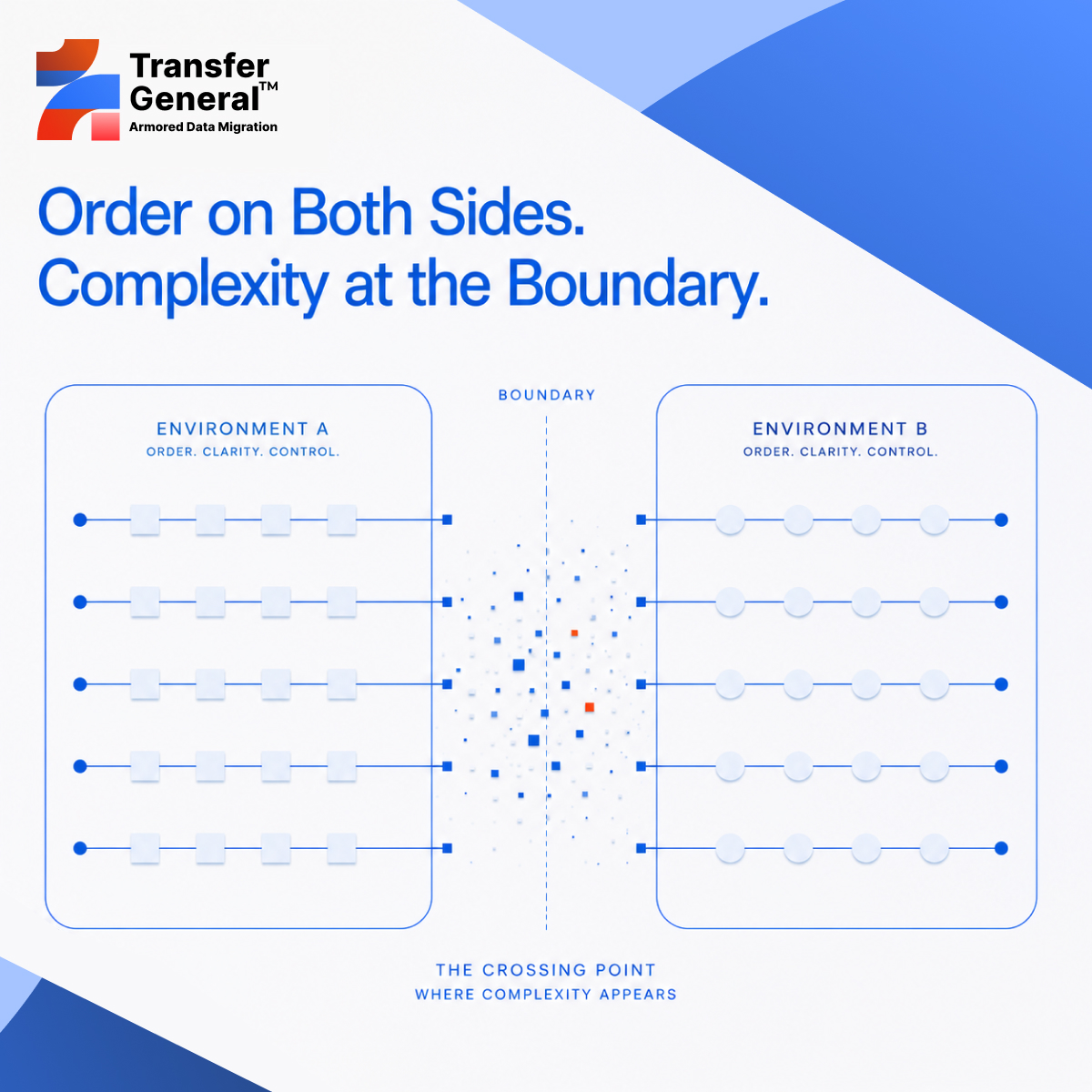
Cloud logging has matured significantly. Every major CSP offers centralized telemetry, tamper-evident storage, and detailed access records. Inside a single cloud environment, audit readiness feels solved. But regulated data does not stay in one place — and the moment it crosses a cloud boundary, the picture changes completely.
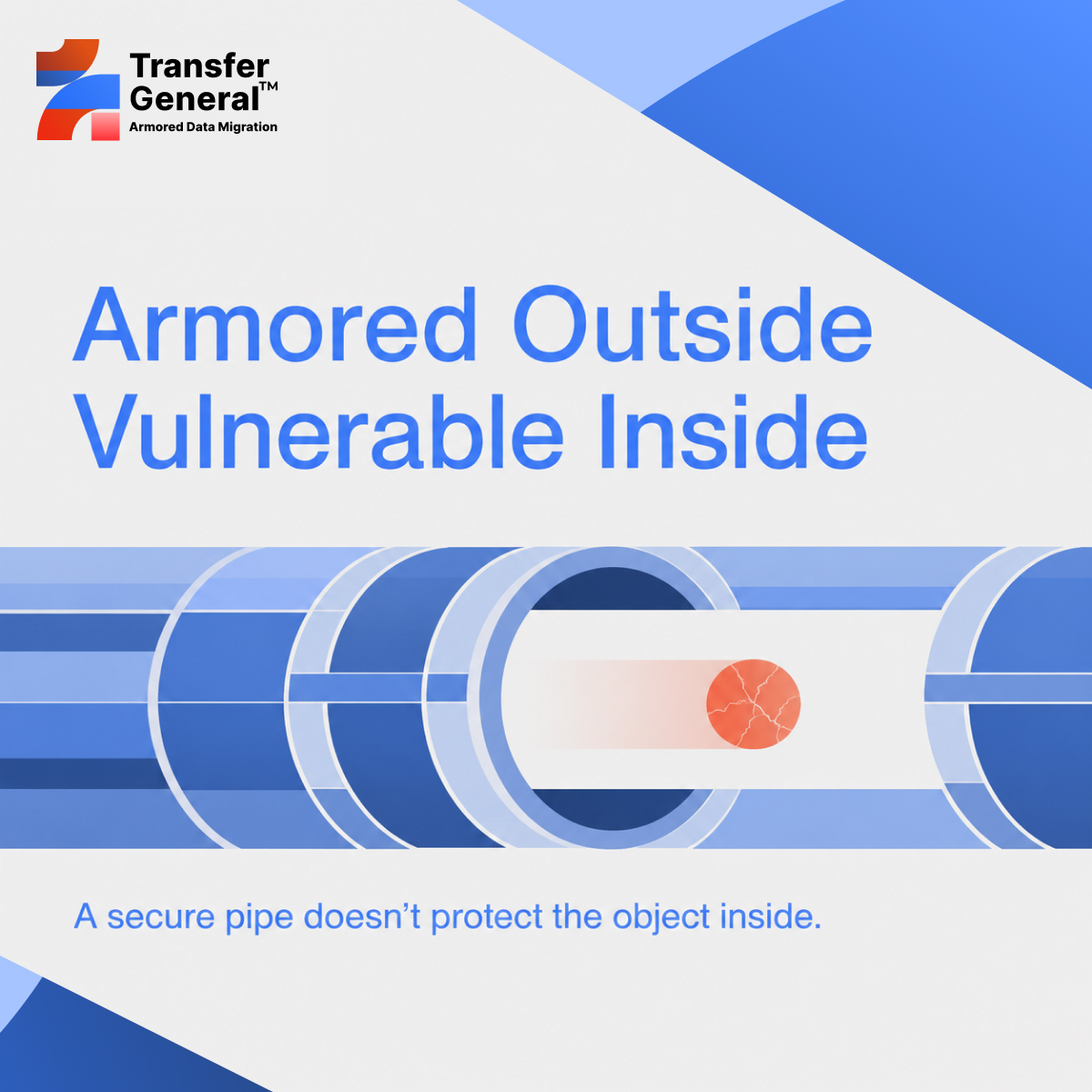
Most teams moving regulated data between cloud environments check one box: encryption in transit. TLS is enabled. The transfer is encrypted. Done. But transport encryption and object-level protection are not the same thing — and the difference matters enormously for regulated industries.